
Boca Raton
(561) 488-4848
Ongoing diabetic foot exams, circulation and nerve checks, and wound prevention at Family Foot Center in Boca Raton and Boynton Beach, FL.
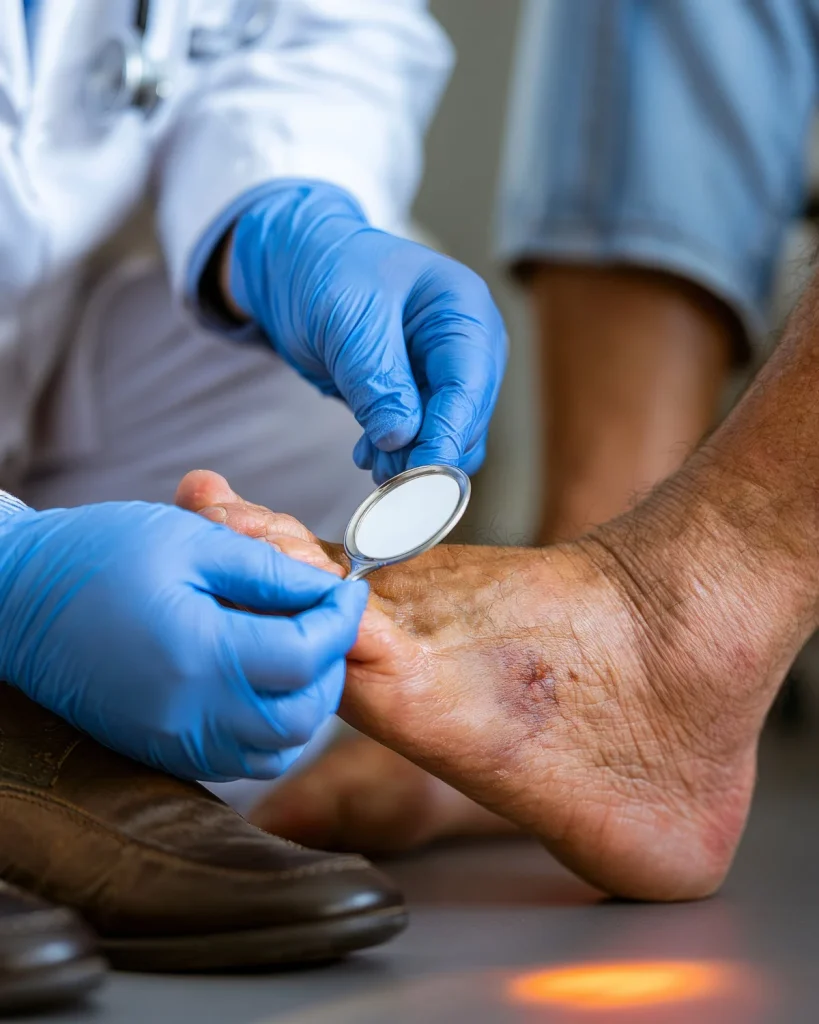
Diabetes can change how your feet feel, how they heal, and how they respond to everyday pressure. Elevated blood sugar over time can affect circulation and nerve function, which means a small problem, a blister, a cut, a callus that has quietly gotten too thick, can turn into something serious before you notice it. This is especially true when diabetic neuropathy has reduced your ability to feel pain, heat, or pressure in your feet. Regular podiatric exams are one of the most protective habits a person with diabetes can build into their routine, alongside daily self checks at home. If you’ve already been diagnosed with nerve involvement, read more on our Diabetic Neuropathy page.
1
Checking pulses and blood flow to identify early signs of peripheral arterial disease
2
Checking feeling in your feet, with nerve testing (NCV/EMG) if we suspect neuropathy.
3
Looking for dryness, cracking, or areas of unusual redness
4
Since ingrown or thickened nails can become entry points for infection
5
The calluses, blisters, or skin breakdown that can progress into a diabetic ulcer if left unaddressed

Diabetic foot care works best as a standing relationship with your podiatrist rather than a one-time appointment. Because diabetes is a long-term condition, the risk to your feet doesn’t disappear after one clean exam, it’s something we monitor together over months and years, adjusting your plan as your circulation, sensation, or activity level changes. Many of our diabetic patients in Boca Raton and Boynton Beach are placed on a recurring schedule specifically so small changes get caught early, before they become urgent. If you have diabetes, you should have a professional foot exam at least once a year, and more often if you have neuropathy, poor circulation, or a history of foot ulcers. We’ll let you know what schedule makes sense for you.

Anyone living with type 1 or type 2 diabetes can benefit from routine podiatric care, but the need becomes more pressing with a longer diabetes history, existing neuropathy, poor circulation, a prior foot ulcer, or difficulty seeing or reaching your own feet for self checks. If you have diabetic neuropathy, ongoing foot exams become part of protecting your mobility and independence, not just your feet.


A new wound, sore, or blister that isn’t healing
Any change in skin color or temperature in one foot compared to the other
New numbness, tingling, or burning pain
Redness, swelling, warmth, or drainage that could signal infection
A foot that suddenly looks or feels different than usual, even without pain

Family Foot Center accepts all major insurance plans, though HMO plans are not accepted. Coverage can vary by plan, and our team can help verify your benefits before your visit.
Many diabetic foot complications may be preventable, or catchable at a much more manageable stage, with regular exams, steady blood sugar management, proper footwear, and prompt attention to any changes you notice.
Because of reduced circulation and sensation, a wound that seems minor can escalate quickly in a diabetic foot. Our Wound Care page covers how we evaluate and treat wounds that are already underway.
Depending on your foot structure and risk level, custom orthotics or diabetic footwear may be part of your care plan.
A list of current medications, a recent A1C if you have one, and the shoes you wear most often can all help us tailor your exam and recommendations.