Boca Raton
(561) 488-4848
Regenerative treatments help your body repair damaged tendons, soft tissue, and nerves without surgery. They fit between basic care (rest, orthotics, bracing, physical therapy) and an operation, so they’re usually the next step when basic care hasn’t fully worked. We offer four options at both offices, and each one is explained on its own page below.
Think of treatment as three steps. Plan A is basic care: rest, bracing, custom orthotics, and physical therapy. Plan B, if Plan A doesn’t fully work, is one of our regenerative treatments, matched to your diagnosis. Plan C is surgery, saved for the cases where A and B haven’t been enough. The middle step gives you real, active treatment instead of just waiting it out.
1
Chronic pain, plantar fasciitis, tendon injuries, some nerve-related pain
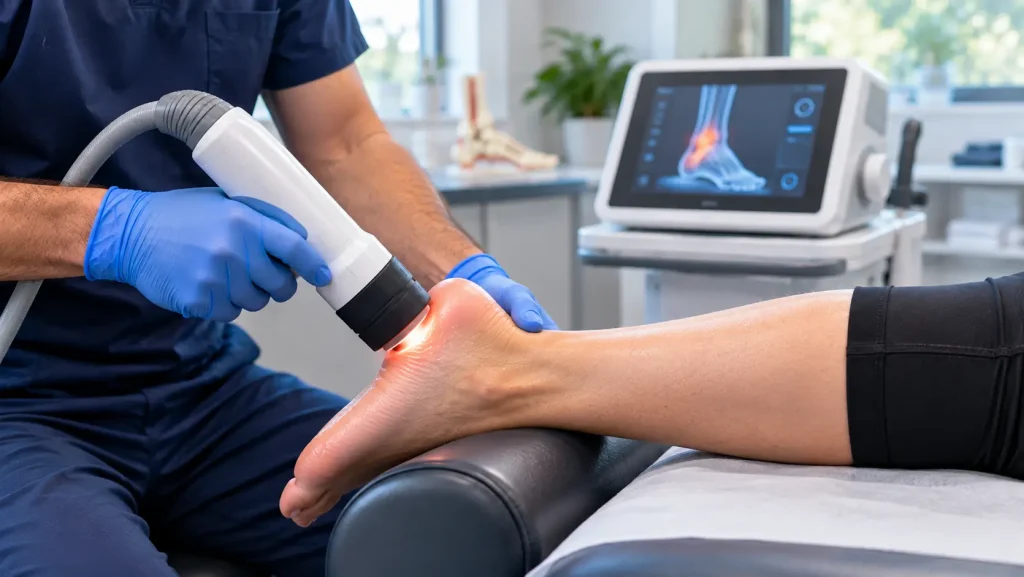
Acoustic (shockwave) energy delivered in brief in-office sessions
2
Nerve pain, joint pain, inflammation
Focused light delivered in brief in-office sessions
3
Damaged soft tissue, slow-healing wounds
Injected or applied human birth-tissue allograft
4
Fat pad loss, loss of natural cushioning
Injected human adipose (fat) tissue allograft
Candidacy for any regenerative treatment starts with an in-office evaluation and an accurate diagnosis. Not every foot or ankle condition responds the same way to every regenerative option, so Dr. Pinsky and the clinical team match the treatment to the specific tissue involved (tendon, plantar fascia, nerve, fat pad, or wound) and the patient’s health history.
Regenerative treatment isn’t right for everyone. Circulation problems, infection, and some medical conditions can change what we recommend, and we’ll talk that through with you at your visit.
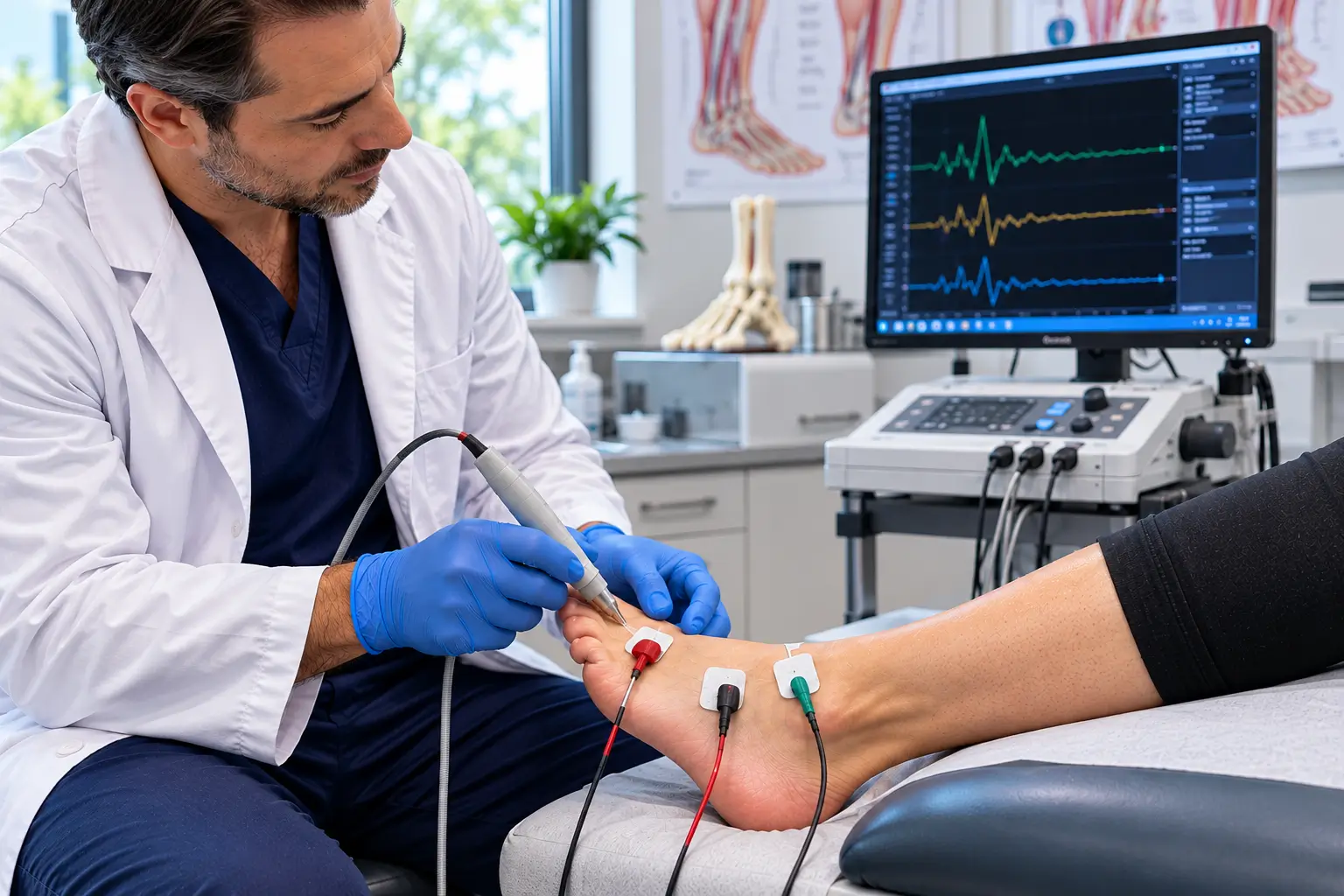
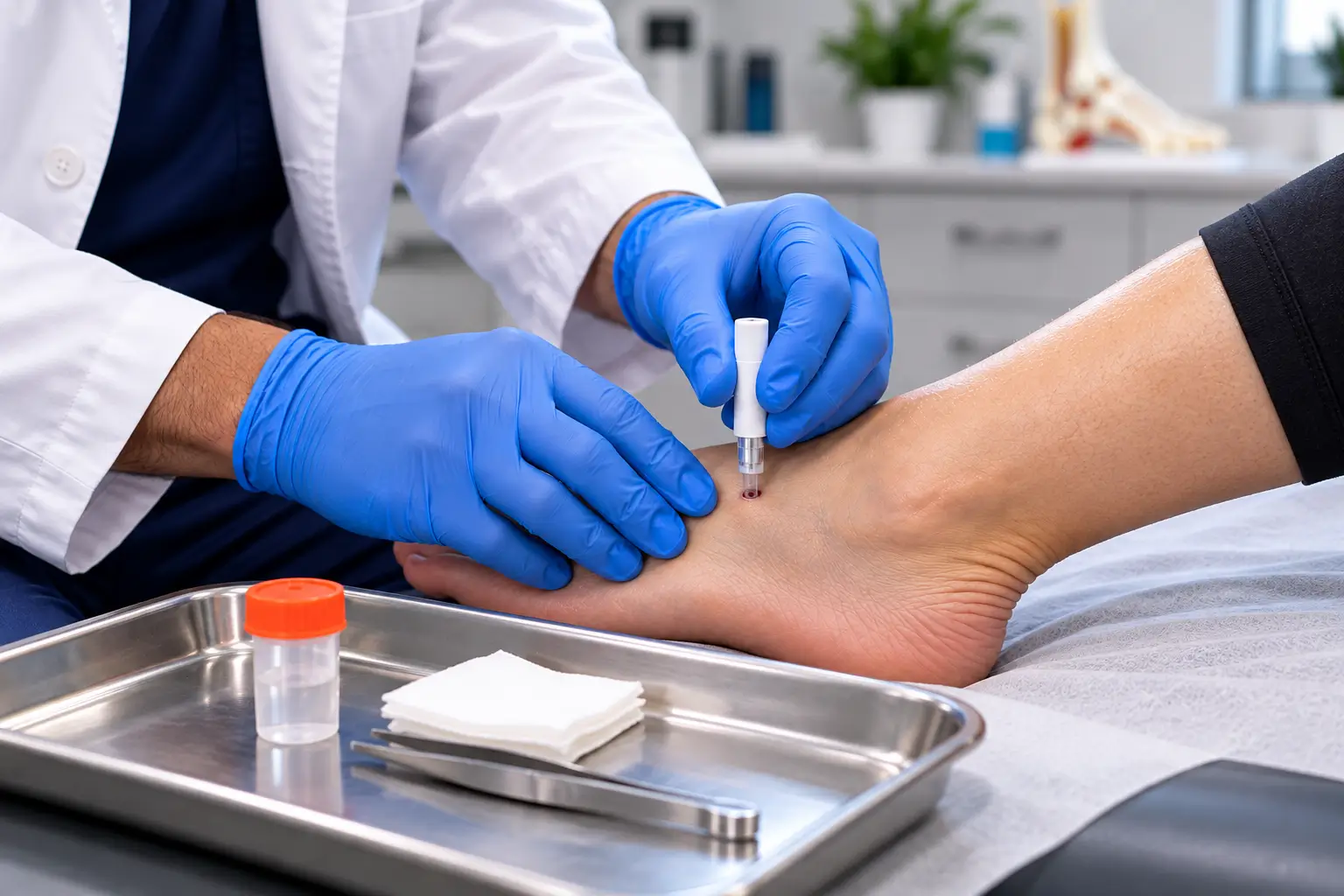
Nerve conduction velocity (NCV) and EMG studies measure how well electrical signals travel through the nerves and muscles of the foot and leg, helping identify whether nerve damage is present and how severe it may be. Skin-biopsy nerve-fiber testing looks directly at small nerve fibers in a small skin sample, which can help confirm small-fiber neuropathy that other tests may miss.
Together, these tools give Family Foot Center’s clinical team objective data to guide whether a patient may be a candidate for nerve-focused regenerative treatment such as Remy Laser Therapy, rather than relying on symptoms alone.
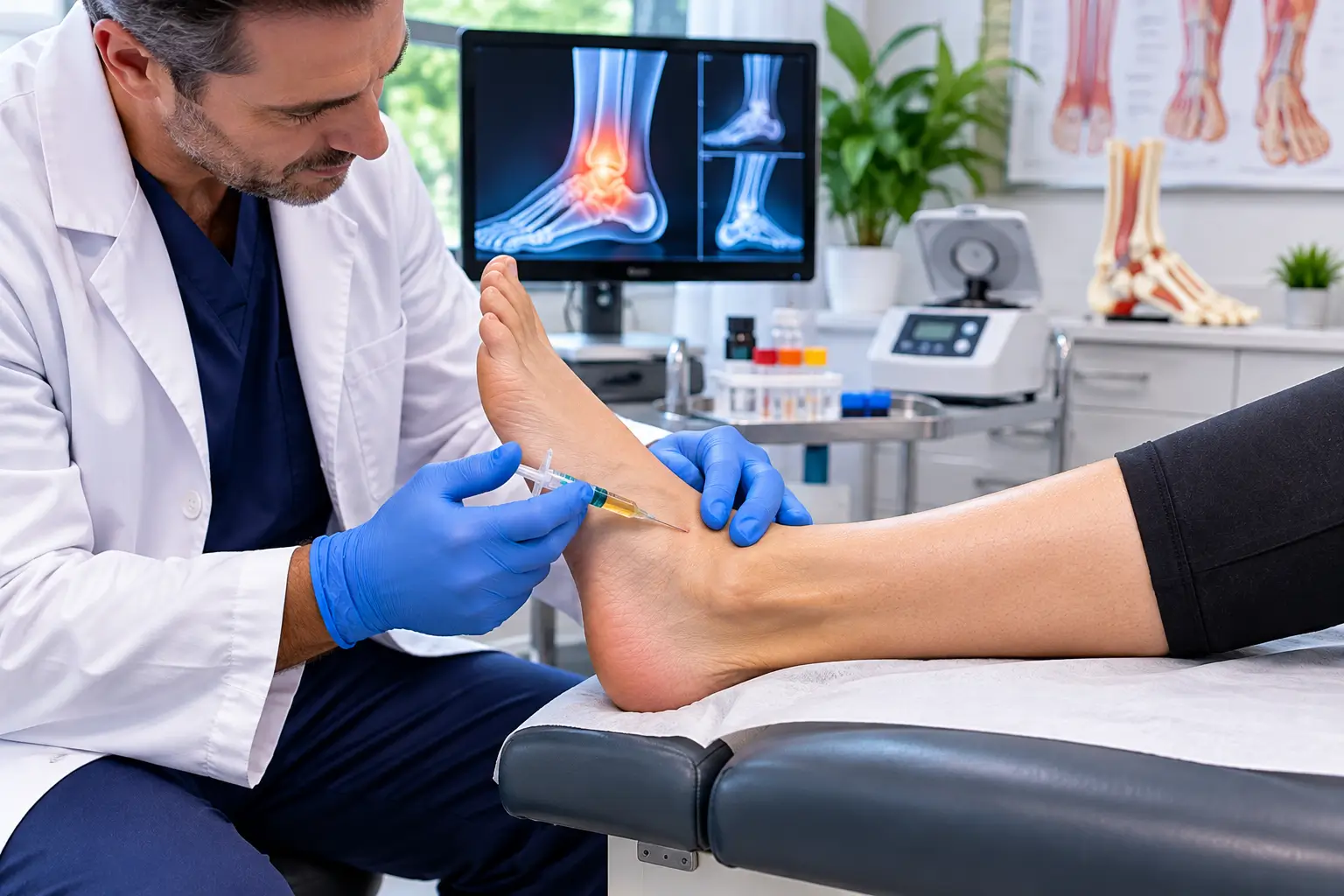
Family Foot Center accepts all major insurance plans (HMO plans are not accepted), but coverage for regenerative treatments varies by plan and by procedure. The team verifies benefits and discusses out-of-pocket costs before starting any treatment.
Regenerative treatments like SoftWave Therapy, Remy Laser Therapy, DPMx Tissue Allograft, and Liposana Tissue Allograft are non-surgical: no incisions, no general anesthesia, and typically little to no downtime, compared with a surgical procedure and its recovery period.
Pricing for regenerative treatments varies by treatment type and by insurance coverage. Ask the office for current pricing on regenerative options.
SoftWave Therapy and Remy Laser Therapy are non-invasive and generally well tolerated. DPMx and Liposana are human tissue allografts, and safety information, sourcing, and regulatory details are reviewed with each patient prior to treatment.
Can I get regenerative treatment at both the Boca Raton and Boynton Beach offices?
Family Foot Center offers regenerative treatments at its Boca Raton and Boynton Beach locations; call the office nearest you to confirm which treatments are available on a given visit.